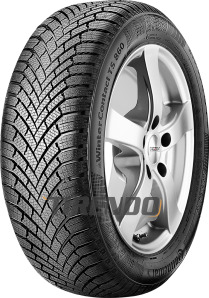
Cool Chili ensures maximum braking performance in any wintry weather condition
Liquid Layer Drainage reduces the braking distance on frost-covered and icy roads
Snow Curve+ technology for safe cornering on snow-covered roads
An ace in all aspects
Maximum safety in any wintry weather condition for compact and mid-sized vehicles.
Technical highlights.
Cool Chili ensures maximum braking performance in any wintry weather condition. The Maximum Traction Silica Compound of the newly developed Cool Chili technology ensures an excellent wet grip and therefore improves braking performance significantly. With its Winter Performance Resins and the Flexible Polymer Matrix, the WinterContact TS 860 stays flexible in any winter weather and transfers the braking forces safely onto wet, icy and snow-covered roads.
Liquid Layer Drainage reduces the braking distance on frost-covered and icy roads. The Multi Channel Sipe Design, a new complex sipe channel system, helps to constantly dewater the tyre’s contact surface for an improved braking performance on icy and frost-covered roads. The vertical channels of the sipes support the drainage of the water in the horizontal channels. The horizontal channels then drain water into the main groove tread. Thus, Liquid Layer Drainage eliminates the danger of deteriorated braking performance caused by melting water – the liquid layer between the tyre and the ice simply gets removed from the contact surface. This results in outstanding braking performance, helping you to come to a stop faster.
Snow Curve+ technology for safe cornering on snow-covered roads. The new WinterContact TS 860 grip-enhanced 3D Groove Structure strengthens the interlocking of the tyre with snow-covered roads – especially when cornering. The snow does not only get compressed in the main tread groove but also in the tyre’s overall grip-enhanced grooved wall structure – at more than 1,000 spots all over the profile. This Snow+ Curve+ technology enables the tyre to transmit higher lateral forces and thereby provide a better overall grip while cornering.
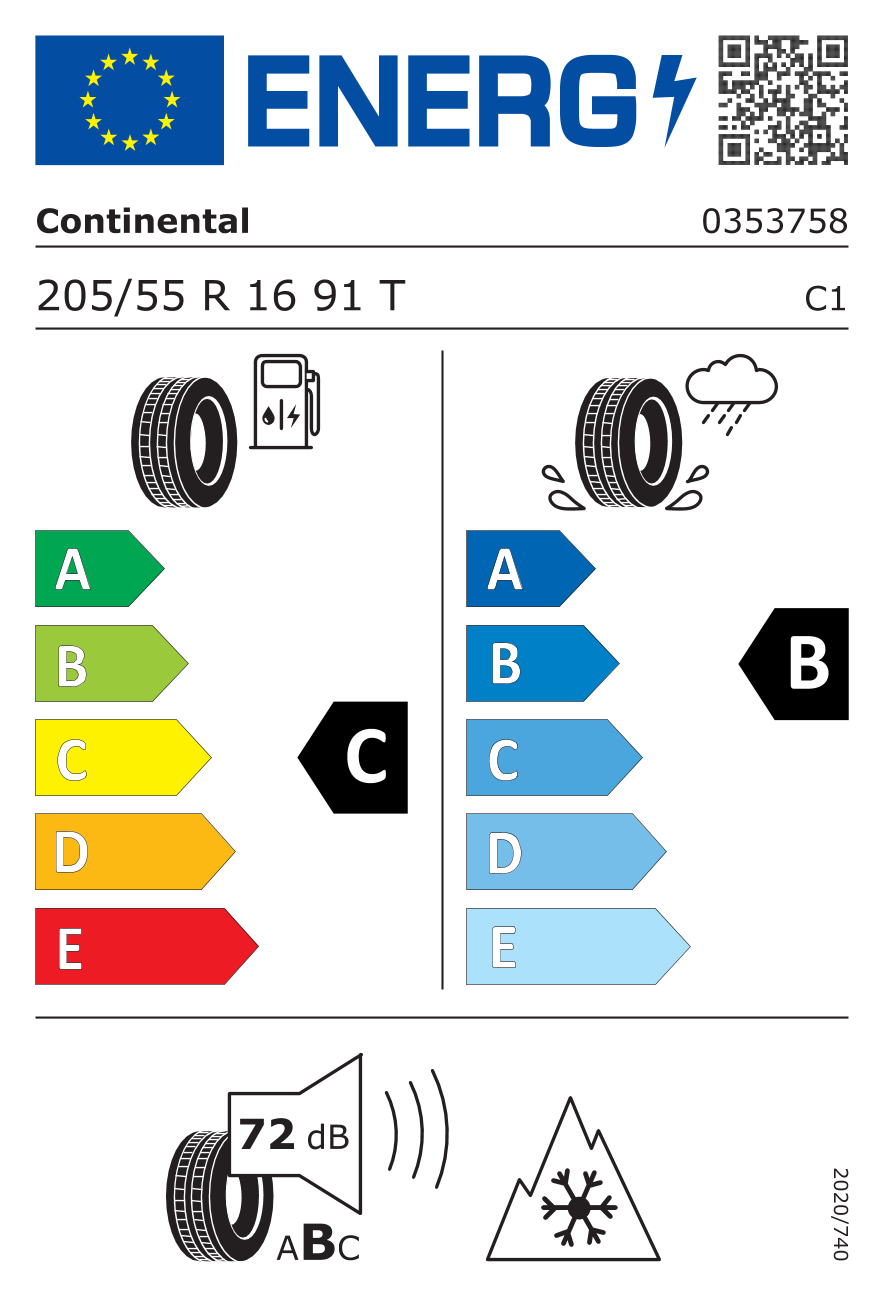
EU Tyre Label and Efficiency Classes
The European Union has introduced the EU Tyre Label by Regulation (No. 1222/2009) identically and bindingly for all EU member states. It applies to passenger car tyres, light commercial vehicle tyres and heavy commercial vehicle tyres produced after 01.07.2012.
Three different areas are tested: rolling resistance, wet grip and the rolling noise the tyre makes on the road.
The following are not affected by the EU Tyre Label: retreaded tyres, professional off-road tyres, racing tyres, tyres with additional devices to improve traction such as spiked tyres, T-type emergency tyres, special tyres for fitting to vehicles first registered before 1 October 1990, tyres with a maximum authorised speed of 80 km/h, tyres for rims with a nominal diameter of 254 mm or less or 635 mm or more.
With this regulation, the European Union is pursuing the goal of promoting economic and ecological efficiency in road traffic as well as increasing road safety on the one hand, and on the other hand, granting consumers more product transparency and at the same time serving as an active decision-making aid.
Already during the incorporation, experts criticise the fact that the EU Tyre Label unfortunately only shows a few product characteristics. Apart from rolling resistance, wet grip and rolling noise, which are the main focus of EU tyre labelling, tyres have much more important and safety-relevant product characteristics, such as aquaplaning properties, driving stability, service life, braking properties on dry and wet roads, behaviour in wintry conditions, etc.
Tyre manufacturers point out that test results from various institutions and journals remain an important information medium for the end consumer. These tests usually focus on further safety-relevant product characteristics besides the EU standard qualifications for tyre labelling, which are always important for the final customer.
WinterContactTS860 tyre review
Average based on 20 test results
Grip in dry conditions
Braking in dry conditions
Grip in wet conditions
Braking in wet conditions
Grip in snow
Driving comfort
Internal noise level
Tyre wear
Fuel consumption
Kilometers driven355,165
25.03.2021fromMike Joul These tyres won Autoexpress winter testing award and it's easy to see why, I've driven in deep snow with no loss of grip or skidding. I hate snow but these have given me a new level of confidence. I've never failed to get to work or home. The only problem I have had is other road users blocking roads with summer tyres or low profile tyres on. Yes they cost more but they are worth it. I have tried other brands but find these the best. I buy two each year which I put on the front and the older ones in the back, with no loss of traction.
19.04.2020fromJohn Gilbert Firstly, I cannot comment on what they are like in snow as where I live in the UK had one snowy day this winter. I look on winter tyres as like insurance: I pay for them but hope I never have to use them much.
They did absolutely fine in the wet and sub-zero conditions which I did encounter and I felt safe having the right tyres for the conditions.
This is not my first set of Contis and won't be my last.
28.03.2020fromGeorge These tyres are the dogs. No snow or ice this year to leave feedback. After 6 months driving over the winter months, and 3600 km's, the wear was only 1mm on the back, and 1/2 mm on the front. Truly outstanding. I won't need to change these tyres for years. Well done Continental.
16.06.2019fromRose Great grip. No problems driving in snow & ice, even going up hills. Felt like driving in normal road conditions. Previous winter, before I changed to winter tyres, car had no grip whatsoever, couldn't even manage a slight incline. Continental winter tyres are amazing, money well spent!





 %service-partner-advantages-list%